
In this post
- What is the National Museum of Korea like?
- Five places to see at the National Museum of Korea
- Getting to the National Museum of Korea: the underground passage from Ichon Station Exit 2
- National Museum of Korea hours, closures, and free admission
- English, Chinese, and Japanese tours and the exhibition guide app
- National Museum of Korea MU:DS gift shops: where to go and what to buy
- Tips from visitors
- Who I’d recommend the National Museum of Korea to
 Glad you're hereLet's explore Korea together
Looking for an indoor place to spend a day in Seoul? Anyone can enter the Permanent Exhibition Hall at the National Museum of Korea (국립중앙박물관) for free. I’ll walk you through the hours, galleries to see, directions, and the MU:DS gift shops.
At a glance
• Location: Yongsan, Seoul, near Exit 2 of Ichon Station on Subway Line 4 and the Gyeongui–Jungang Line
• Hours: 9:30 a.m.–5:30 p.m.; open until 9 p.m. on Wednesdays and Saturdays
• Closed: January 1, Seollal (설날, Lunar New Year’s Day), and Chuseok (추석, Korean Thanksgiving Day)
• Admission: Free for the Permanent Exhibition Hall; some special exhibitions charge a fee
• Good for: People who want to see Korean history and art in a day, or who are looking for somewhere to go on a rainy day
What is the National Museum of Korea like?
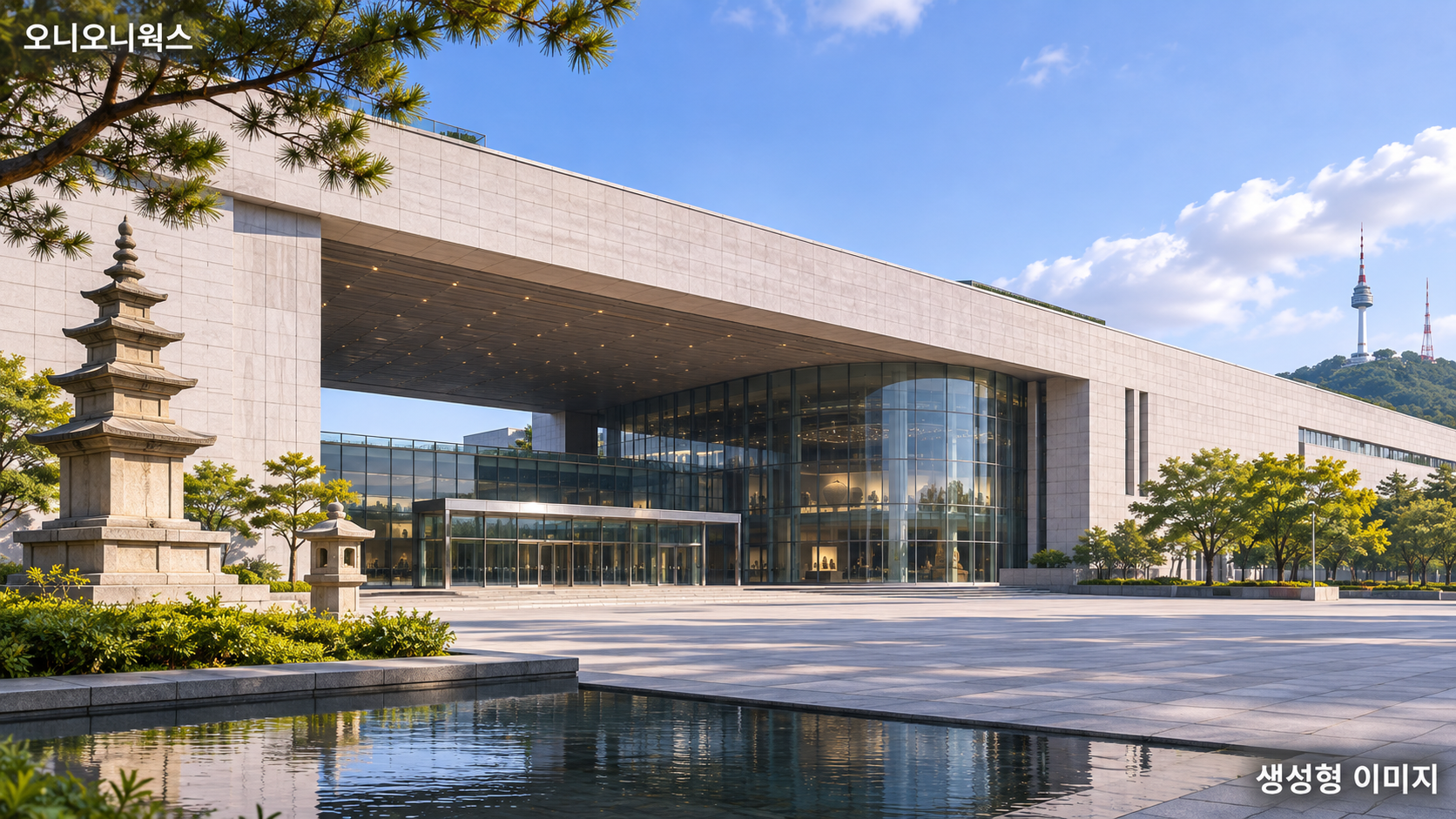
The National Museum of Korea is the country’s flagship museum, bringing Korean history and art together under one roof. It opened at its current location in Yongsan (용산), Seoul, in 2005.
The Permanent Exhibition Hall has seven galleries. The museum holds about 440,000 artifacts, and about 10,000 are on display. Exhibits change regularly depending on their condition.
The exhibitions cover three floors. The first floor has the Prehistory and Ancient History Gallery (선사·고대관) and the Medieval and Early Modern History Gallery (중·근세관). The second floor has the Calligraphy and Painting Gallery (서화관), the Donation Gallery (기증관), and the Room of Quiet Contemplation (사유의 방). The third floor has the Sculpture and Crafts Gallery (조각·공예관) and the World Art Gallery (세계문화관). There are also separate special exhibition halls and a Children’s Museum (어린이박물관).
Five places to see at the National Museum of Korea
The museum is large. If it’s your first visit, you might wonder where to start. I’d visit these five places in order, from the first floor to the third. The museum’s free highlights tour also starts on the first floor and ends at the Room of Quiet Contemplation on the second.
First floor: Path to History and the Ten-Story Stone Pagoda from Gyeongcheonsa Temple Site
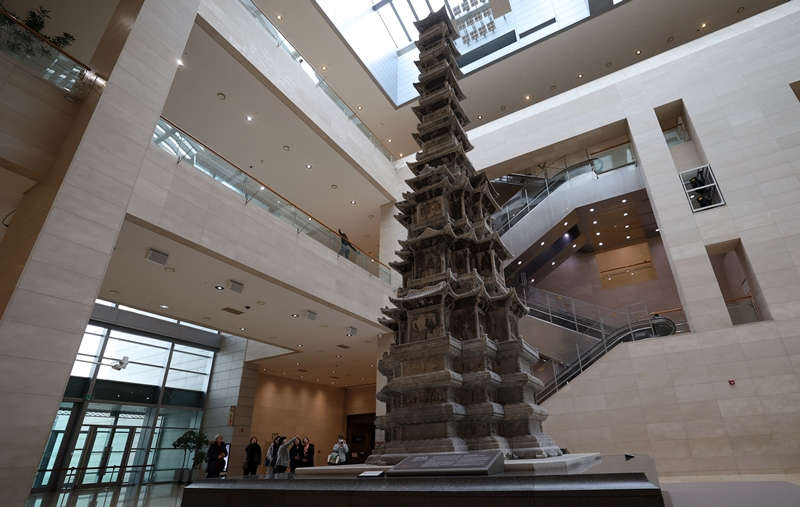
When you enter the Permanent Exhibition Hall on the first floor, you’ll find a wide corridor called the Path to History (역사의 길). At its end stands the Ten-Story Stone Pagoda from Gyeongcheonsa Temple Site (경천사 십층석탑). The entire stone pagoda is inside the building. It’s a surprise for many first-time visitors.
First floor: Prehistory and Ancient History Gallery, gold crown and belt
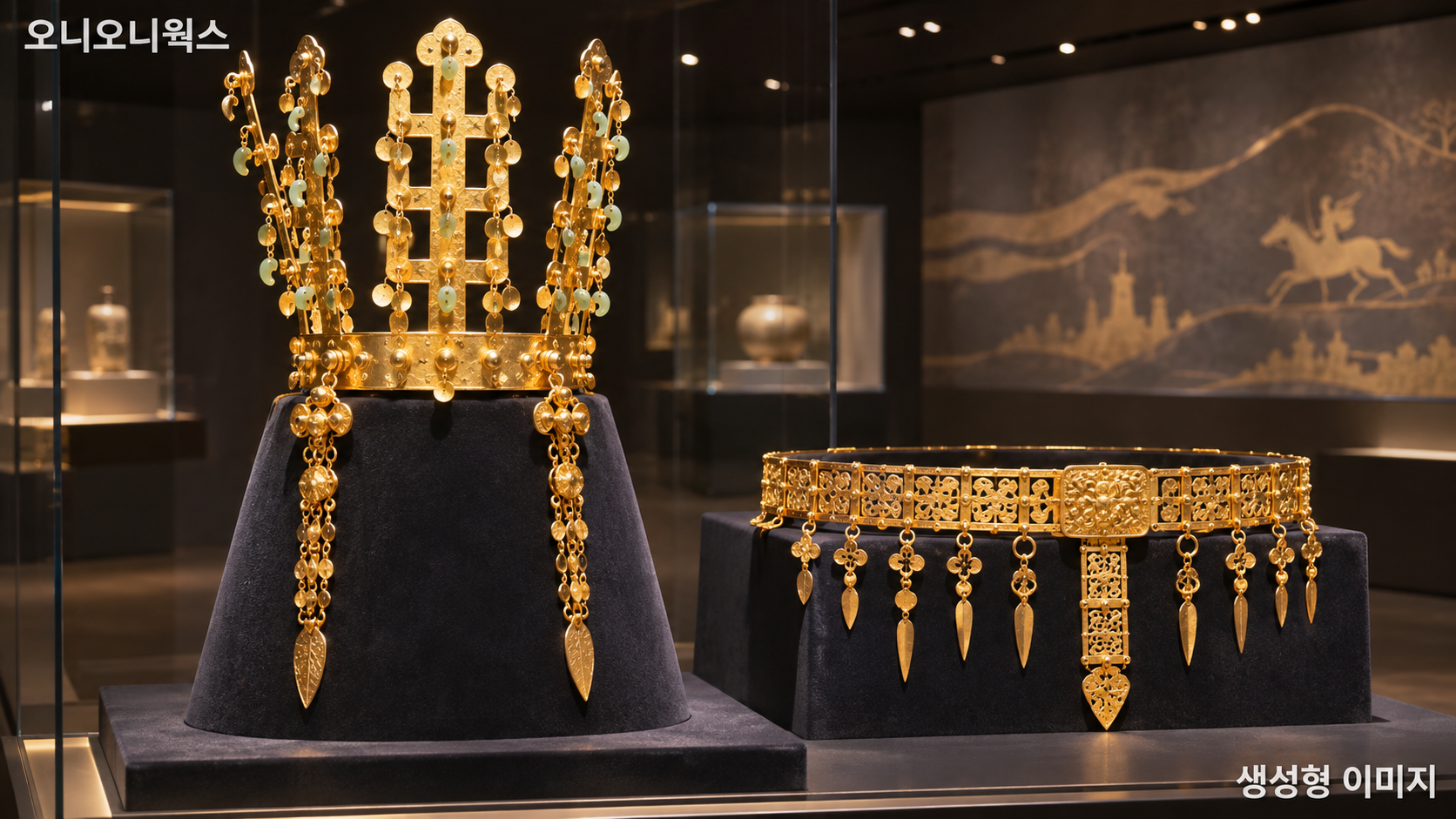
The first-floor Prehistory and Ancient History Gallery covers the Paleolithic period through Balhae. You’ll find hand axes, comb-pattern pottery, and bronze objects decorated with farming scenes here. You can also see a Silla gold crown and belt on the first floor.
Second floor: Room of Quiet Contemplation and Pensive Bodhisattvas
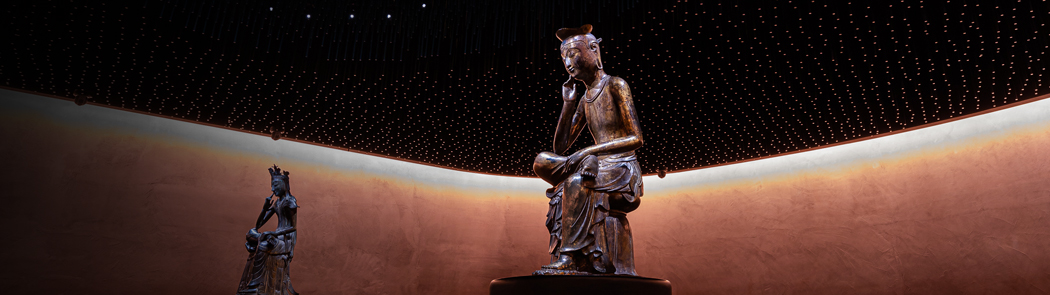
The Room of Quiet Contemplation is in Room 209 on the second floor. It’s a dimly lit room where you can quietly view Pensive Bodhisattva statues (반가사유상), Buddhist figures seated with one leg resting on the other knee in thought. It’s one of the museum’s most popular places.
Third floor: Celadon Gallery and Buncheong and White Porcelain Gallery
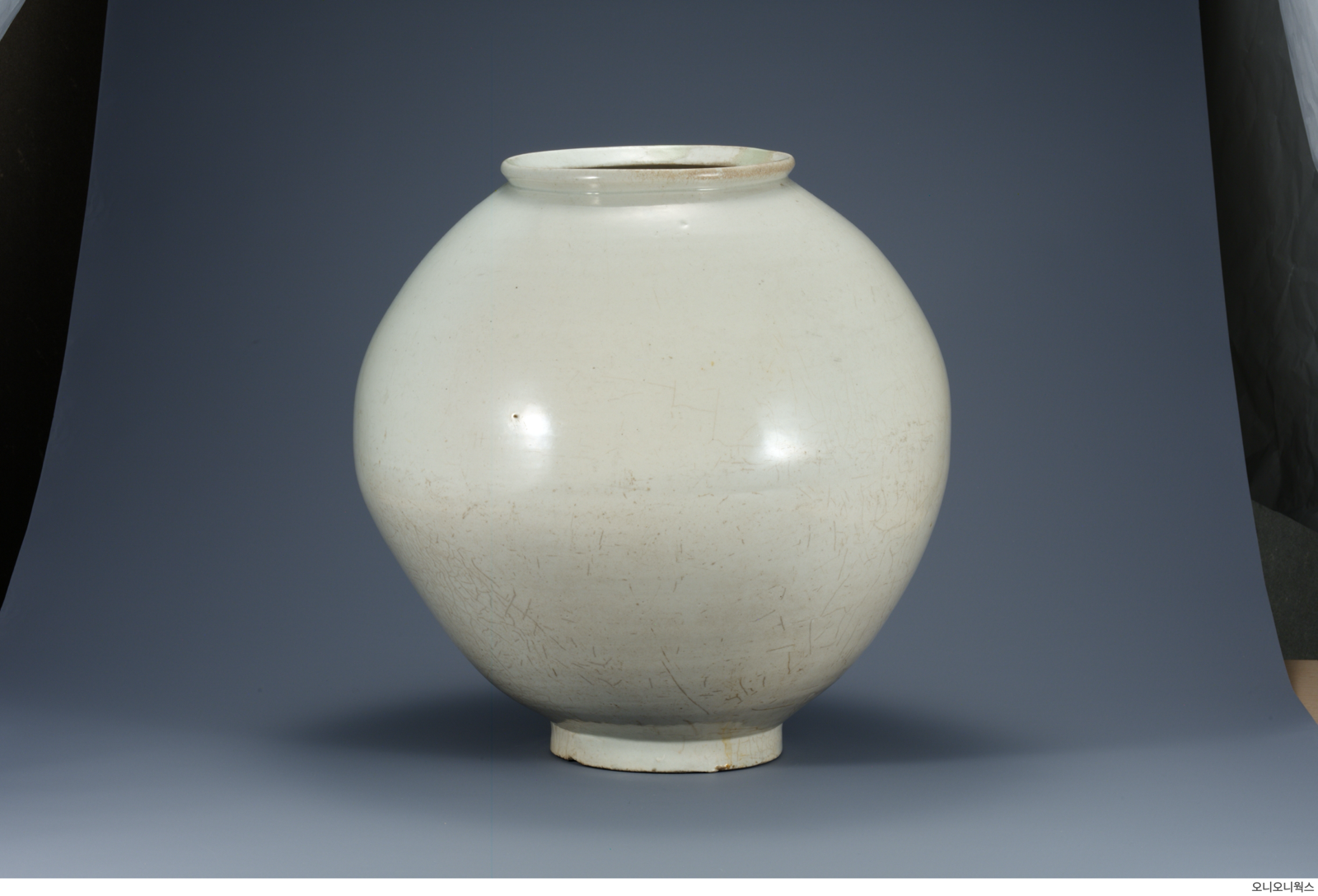
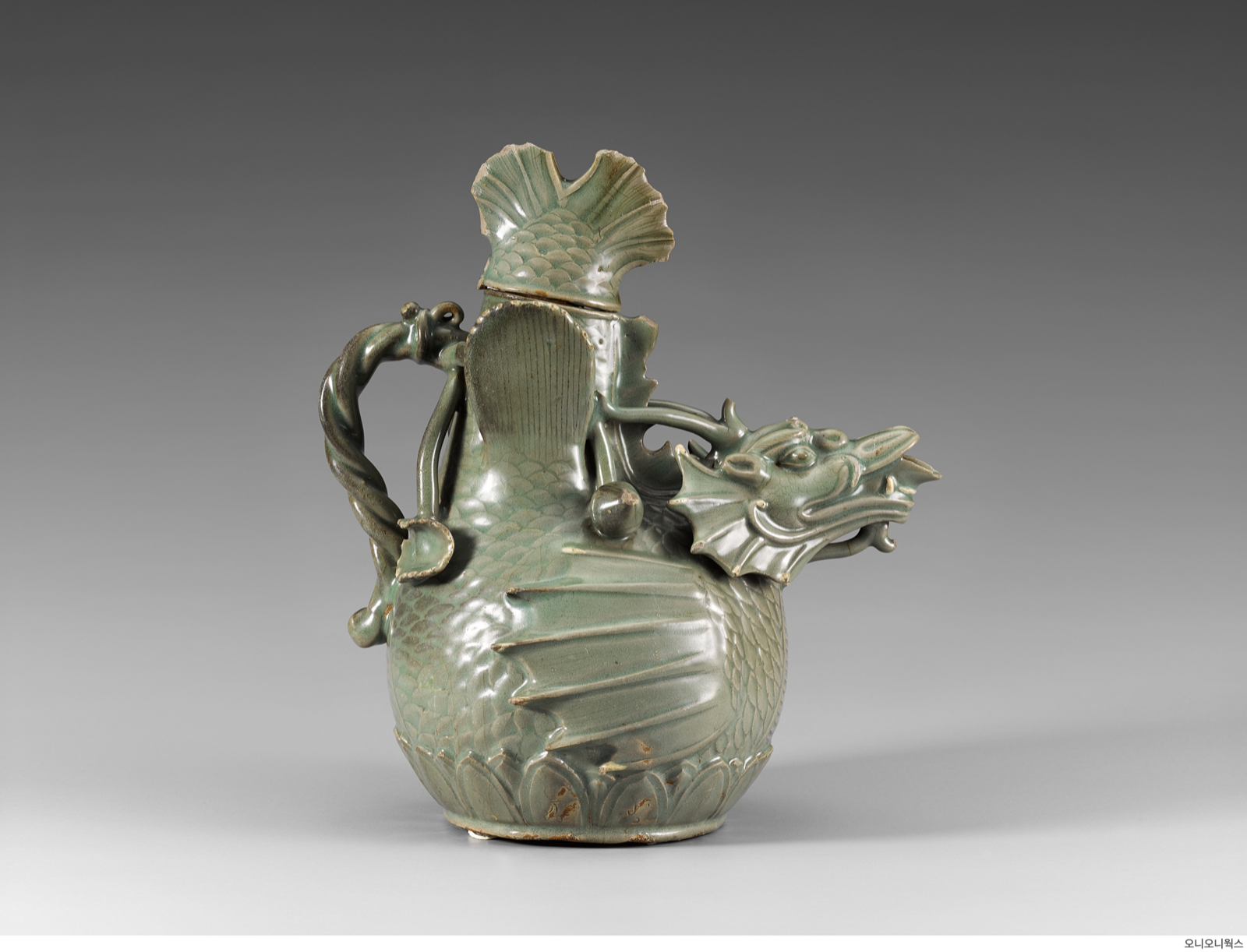
On the third floor, you can visit the Celadon Gallery (청자실, Room 303) and the Buncheong and White Porcelain Gallery (분청사기·백자실, Room 304). The white porcelain moon jar (백자 달항아리), a round white jar, and a celadon ewer shaped like a fish and dragon are highlights of the third floor. Through January 31, 2027, the Buncheong and White Porcelain Gallery also hosts the themed exhibition “Evergreen Bamboo of the Four Seasons in Ceramics” (사계절 푸른 대나무, 도자기에 담다), featuring ceramics decorated with bamboo.
Third floor: World Art Gallery and the Dunhuang Buddhist manuscript exhibition
Through January 24, 2027, the Central Asia Gallery (중앙아시아실) in the third-floor World Art Gallery hosts “Opening a Thousand-Year Seal: A Special Display of Dunhuang Buddhist Manuscripts” (천년의 봉인을 열다 – 돈황 불교 사경 소장품 특별공개). These manuscripts are handwritten copies of Buddhist scriptures. The exhibition is inside the Permanent Exhibition Hall. You can stop by while visiting the other galleries.
Oni’s tip
Some galleries are closed through January 28, 2027: the Buddhist Painting Gallery (불교회화실, Room 203), Lacquerware and Woodcraft Gallery (목칠공예실, Room 204), Buddhist Sculpture Gallery (불교조각실, Room 301), Metal Crafts Gallery (금속공예실, Room 302), Calligraphy and Painting Galleries 3 and 4 (서화실 3·4, Rooms 202-3 and 202-4), and the third-floor immersive gallery “Space_Between” (공간_사이). They reopen on January 29, 2027.
Calligraphy and Painting Galleries 1 and 2 (서화실 1·2, Rooms 202-1 and 202-2) are closed from November 23 to 26, 2026, for an exhibit change.
Read next — Lotte World Adventure Seoul: Ticket Prices, Foreigner Discounts, and How to Wait Less
Getting to the National Museum of Korea: the underground passage from Ichon Station Exit 2
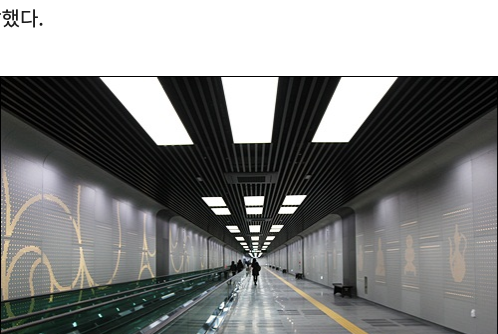
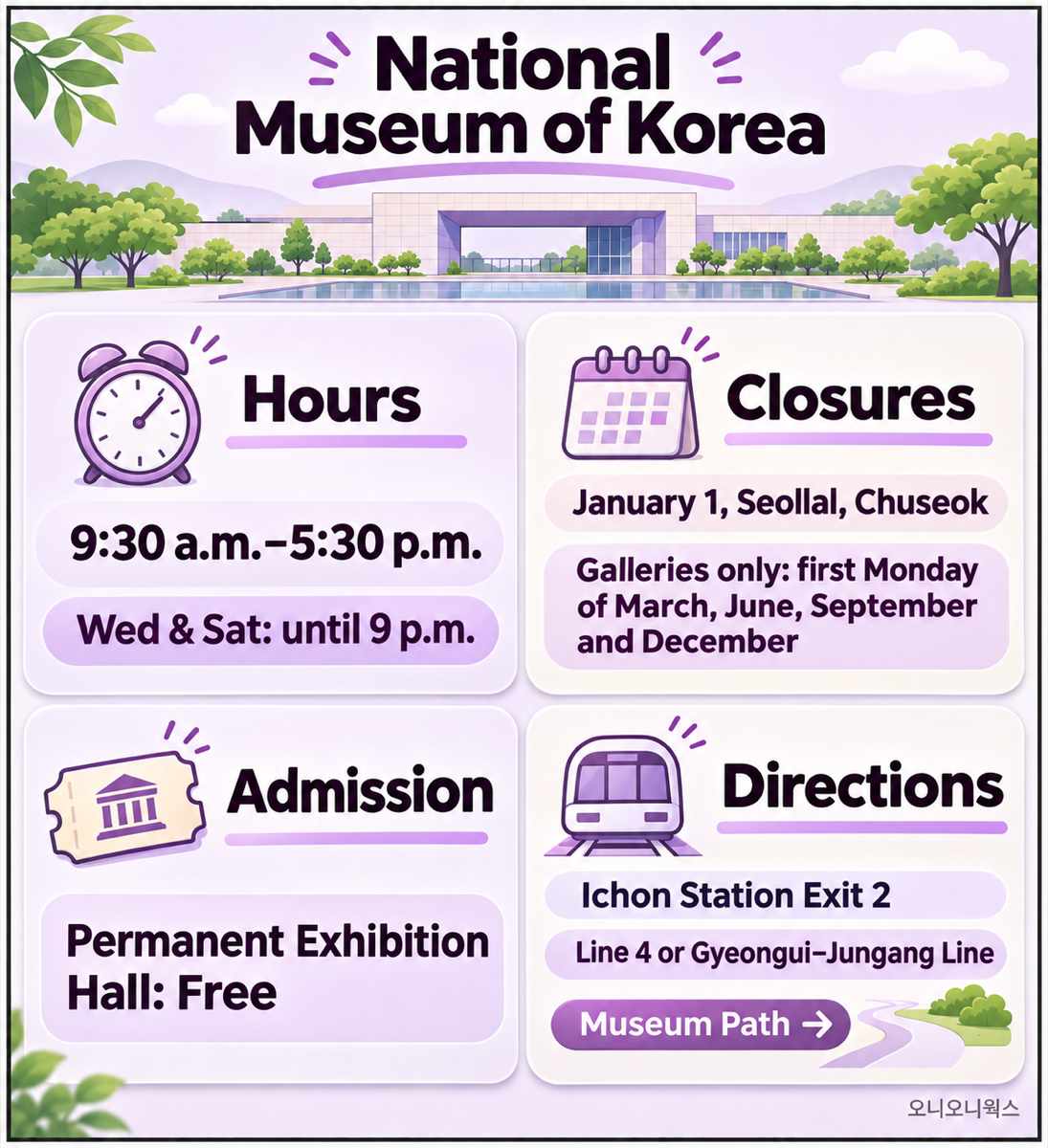
The easiest way is by subway. Take Line 4 or the Gyeongui–Jungang Line to Ichon Station (이촌역). Head toward Exit 2, and you’ll find the Museum Path (박물관 나들길), an underground passage leading to the museum. Follow it to the museum’s west gate.
Exits at Korean subway stations are numbered. Follow the signs for Exit 2 inside the station.
- The Museum Path is open from 7 a.m. to 11 p.m. It’s closed on days when the museum is closed.
- Elevators are available at Ichon Station Exit 1 and along the Museum Path. If you’re using a stroller or wheelchair, take this route.
- In a map app such as Naver Map (네이버 지도), KakaoMap (카카오맵), or Google Maps, enter “국립중앙박물관” or the address “서울특별시 용산구 서빙고로 137.”
If you’re coming on another line, transfer at one of these stations.
| Your line | Transfer station | Line to take |
|---|---|---|
| Line 1 | Yongsan Station (용산역) | Gyeongui–Jungang Line |
| Line 3 | Oksu Station (옥수역) | Gyeongui–Jungang Line |
| Line 6 | Samgakji Station (삼각지역) | Line 4 |
| Line 7 | Chongshin Univ. (Isu) Station (총신대입구(이수)역) | Line 4 |
| Line 9 | Dongjak Station (동작역) | Line 4 |
If you drive, there’s a parking lot with 903 spaces. For a passenger car, parking costs 900 won for the first 30 minutes and 300 won for each additional 10 minutes.
National Museum of Korea hours, closures, and free admission
The Permanent Exhibition Hall opens at 9:30 a.m. It closes at 5:30 p.m. on Mondays, Tuesdays, Thursdays, Fridays, and Sundays. It’s open until 9 p.m. on Wednesdays and Saturdays. Last admission is 30 minutes before closing.
The Permanent Exhibition Hall and Children’s Museum are free. You can enter without buying a ticket. Only paid special exhibitions charge admission.
| What | Details (as of November 2026) |
|---|---|
| Indoor galleries | Mon, Tue, Thu, Fri, and Sun, 9:30 a.m.–5:30 p.m. (last admission 5 p.m.) |
| Late opening | Wed and Sat, 9:30 a.m.–9 p.m. (last admission 8:30 p.m.) |
| Outdoor exhibition area (garden) | Daily, 7 a.m.–10 p.m. |
| Children’s Museum | 9:30 a.m.–5:20 p.m.; reservations by time slot |
| Closed | January 1, Seollal, and Chuseok |
| Gallery-only closures | First Monday of March, June, September, and December. Next: Monday, December 7, 2026 |
| Admission | Free for the Permanent Exhibition Hall, Children’s Museum, and free special exhibitions |
| Paid special exhibition tickets | Ticket office in front of Special Exhibition Gallery 1, until 30 minutes before the exhibition closes |
| Inquiries | 02-2077-9000 |
On gallery-only closure days, the Permanent Exhibition Hall and Special Exhibition Galleries 1 and 2 are closed. The outdoor garden remains open as usual.
Admission fees may change from 2027
The government is pursuing a plan to charge admission to the National Museum of Korea’s Permanent Exhibition Hall from 2027. The fee and start date haven’t been decided yet. If you’re visiting in 2027, check the museum website’s notices for admission fees first.
Two paid special exhibitions in winter 2026
There are no paid exhibitions in the special exhibition galleries before November 27, 2026. Two paid special exhibitions open after that.
- “The Birth of Modern Art: Masterpieces from the Kunsthaus Zürich” (모던 아트의 탄생 – 스위스 쿤스트하우스 취리히 소장품 특별전) — November 27, 2026–April 18, 2027, Special Exhibition Gallery 1. It brings together 85 paintings and sculptures from the 18th to 20th centuries, including works by Monet, Chagall, Matisse, Picasso, Kandinsky, and Dalí.
- “Marie Antoinette Style” (마리 앙투아네트 스타일) — December 18, 2026–March 31, 2027, Special Exhibition Gallery 2. This exhibition is presented with the Victoria and Albert Museum in the United Kingdom. It features about 190 objects belonging to Marie Antoinette and later works of fashion and decorative art.
| Individual admission | The Birth of Modern Art | Marie Antoinette Style |
|---|---|---|
| Adults (ages 25–64) | 20,000 won | 8,000 won |
| Young people (ages 13–24) | 18,000 won | 6,000 won |
| Children (ages 7–12) | 12,000 won | 4,000 won |
| Young children (ages 4–6) | 10,000 won | Free |
| Ages 65 and older | 10,000 won | Free |
Both exhibitions admit visitors in 30-minute time slots. One person can buy up to four tickets online through Naver (네이버) or Ticketlink (티켓링크). Online bookings open in roughly two-week blocks. For “The Birth of Modern Art,” tickets for December 4–17 open at 10 a.m. on November 20. Bookings for “Marie Antoinette Style” open at 10 a.m. on December 4.
Oni’s tip
Tickets for time slots after 6 p.m. every Wednesday are 50% off for both exhibitions. The Permanent Exhibition Hall is also open until 9 p.m. on Wednesdays. It’s a good evening to see a special exhibition and the permanent collection together.
Sharp objects such as ballpoint pens, pencils, and scissors aren’t allowed inside the “Marie Antoinette Style” exhibition.
 WelcomeLet's explore Korea together
English, Chinese, and Japanese tours and the exhibition guide app
International visitors can join free tours in English, Chinese, or Japanese. There’s no reservation needed; just go to the meeting point at the scheduled time. Tours last about one hour.
| What | Details (November 2026 schedule) |
|---|---|
| Weekdays (Mon–Fri) | 10:30 a.m. and 1 p.m. — English, Chinese, and Japanese |
| Weekends (Sat–Sun) | English and Japanese: 10:30 a.m. and 1 p.m. / Chinese: 1 p.m. |
| Meeting point | In front of the Korean Empire Gallery (대한제국 전시실), first floor of the Permanent Exhibition Hall |
| Fee | Free |
| Who can join | All international visitors. Korean visitors may join only when accompanied by an international visitor |
The tour schedule changes monthly. Groups of 15 or more must reserve in advance. Call 02-2077-9683 for English, 02-2077-9676 for Japanese, or 02-2077-9686 for Chinese reservations.
If the tour times don’t work for you, use the National Museum of Korea (국립중앙박물관) smartphone app. It’s free and provides exhibit information in Korean, English, Chinese, Japanese, and Vietnamese. Turn on Bluetooth and location services, and the app will automatically show nearby exhibits. Bring your own earphones.
Oni’s tip
Download the exhibition guide content in the app using your accommodation’s Wi-Fi before you go. Then you can use it at the museum.
National Museum of Korea MU:DS gift shops: where to go and what to buy
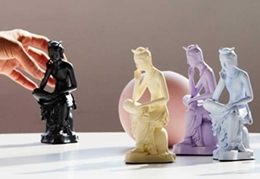
MU:DS (뮷즈) is a museum gift brand created by the National Museum Foundation of Korea (국립박물관문화재단). It sells accessories and everyday items inspired by museum artifacts. Sales reached 21.8 billion won in the first half of 2026 alone. International visitors bought about 1 billion won worth of goods.
The best-selling item is the Pensive Bodhisattva miniature. About 12,000 were sold in the first half of 2026. More than 61,000 have been sold to date. Other items include a dancheong (단청, decorative painted patterns on traditional Korean buildings) keyboard, a moon jar door chime, and a seonbi (선비, traditional Korean scholar) cup set that changes color when a drink is poured into it.
| Shop | Location | Phone |
|---|---|---|
| Museum Shop 1 (상품관 1) | West Wing, first floor | 02-2077-9769 |
| Children’s Museum Shop (어린이상품관) | West Wing, first floor | 02-2077-9773 |
| Museum Shop 2 (상품관 2) | East Wing exhibition area, first floor | 02-2077-9771 |
There’s also a small merchandise display on the third floor. Take a look when the first-floor shops are busy.
One visitor saw a Joseon-era hat key chain for 9,000 won, a blue-and-white porcelain key ring for 15,000 won, and a child-shaped stone figure doll key ring for 22,000 won. A roof-tile-shaped gimbap plate was 25,000 won, and a touch-activated moon jar mood lamp was 50,000 won. Prices may change.
Tips from visitors
Visitors say to think about the bag inspection line first. At the museum entrance, belongings are checked at a security checkpoint. People without bags can line up separately and enter more quickly. Backpacks aren’t allowed in the galleries. You’ll need to put them in a locker on the first floor. After storing your belongings, you can’t join companions who entered ahead of you partway through; you have to enter again from the entrance.
One visitor said they used a locker for free. They also reported finding a nursing room, water dispenser, and phone charging station in the same area.
Visitors also share notes about crowds. One said weekends and holidays are busiest after 2 p.m. and quieter in the morning. Others say the Room of Quiet Contemplation gets crowded, and that the first-floor gift shop line was so long during a holiday that they couldn’t buy anything.
Oni’s tip
I’d visit the Room of Quiet Contemplation first on a weekday morning, then head down to the first floor and up to the third. Food isn’t allowed inside, and photography with flash, tripods, selfie sticks, or gimbals isn’t allowed.
Who I’d recommend the National Museum of Korea to
I’d recommend the National Museum of Korea if you’re discovering Korean history and art for the first time. It’s free, so even a short visit is easy to fit in. On Wednesdays and Saturdays, you can stay into the evening.
Admission fees, hours, and gallery closures can change. Check the National Museum of Korea website before you go. If you’d like a foreign-language tour, head to the first-floor Korean Empire Gallery by 10:30 a.m. on a weekday. Enjoy your trip to Seoul!
― ― ―
This article summarizes information published by the National Museum of Korea and the Korea Tourism Organization, along with visitor reviews, as of November 18, 2026. Special exhibition fees and tour schedules may change depending on museum circumstances.
Sources: Korea Tourism Organization travel information, “National Museum of Korea” · VisitKorea, “National Museum of Korea” https://korean.visitkorea.or.kr/detail/ms_detail.do?cotid=0363da87-ef3b-4c21-8508-34f70dda31fb · National Museum of Korea visitor information https://www.museum.go.kr/MUSEUM/contents/M0101000000.do · National Museum of Korea directions https://www.museum.go.kr/MUSEUM/contents/M0106010000.do?menuId=subway-map · National Museum of Korea regular tours https://www.museum.go.kr/MUSEUM/contents/M0102010100.do · National Museum of Korea exhibition guide app https://www.museum.go.kr/MUSEUM/contents/M0102010400.do · National Museum of Korea leaflet https://www.museum.go.kr/leaflet/fileDownload/kor_leaflet · National Museum of Korea gallery closure notice https://www.museum.go.kr/MUSEUM/contents/M0701010000.do?schM=view&catCustomType=united&catId=128&arcId=23711 · Calligraphy and Painting Gallery temporary closure notice https://www.museum.go.kr/MUSEUM/contents/M0701010000.do?schM=view&catCustomType=united&catId=128&arcId=24093 · “The Birth of Modern Art” exhibition information https://www.museum.go.kr/MUSEUM/contents/M0202020000.do?schM=view&menuId=upcomming&exhiSpThemId=3763678&listType=gallery · “Marie Antoinette Style” exhibition information https://www.museum.go.kr/MUSEUM/contents/M0202020000.do?schM=view&menuId=upcomming&exhiSpThemId=3763677&listType=gallery · YTN https://www.ytn.co.kr/_cs/_ln_0103_202603301559146104_005.html · Economist https://economist.co.kr/article/view/ecn202603300042 · Daum News https://v.daum.net/v/20260706123948224
Photo credits: GPT 생성형 이미지 · 코리아넷 [https://www.kocis.go.kr/koreanet/view.do?page=176&photoPageSize=6&searchCondition=1&searchType=null&seq=1047315] · 국립중앙박물관 [https://mvcm.museum.go.kr/afile/previewOriginal/27775] · 국립중앙박물관 [https://www.museum.go.kr/relic_image/PS01001001/jub000/2017/0508100233810/jub000702-00-00.jpg] · 국립중앙박물관 [https://www.museum.go.kr/relic_image/PS01001001/gae000/2019/0926104041507/gae000002-000-90000.jpg] · 대한민국 정책브리핑 [https://www.korea.kr/news/policyNewsView.do?newsId=148754651]